
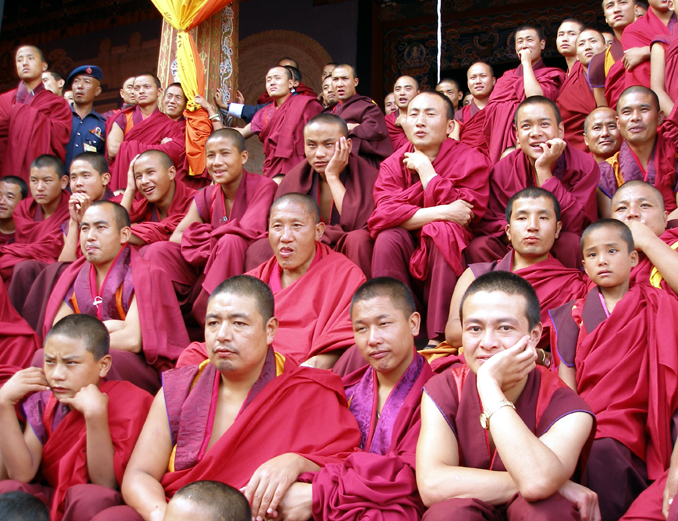
To spend time in a Bhutanese monastery is to glimpse a way of life that feels both ancient and quietly contemporary. Monastic life here is deeply respected, shaped by discipline, learning and spiritual purpose, often beginning in childhood. Young novices—some just six or seven—study Buddhist philosophy alongside English, while learning meditation and ritual practice in surroundings where tradition sits comfortably with the occasional mobile phone.
Days unfold gently, but with structure. Early morning prayers, typically from around 4:30 or 6:00, set the rhythm, followed by study, communal duties and moments of quiet reflection. There is chanting, the preparation of rituals, and sometimes practical tasks such as gardening or rehearsing the intricate masked dances that form part of Bhutan’s living cultural heritage. Evenings draw in late, often around 9:00 or 10:00, after a full and purposeful day.
For visitors, one of the most memorable ways to encounter this world is during a tsechu. These annual festivals are held across Bhutan, in honour of Guru Rinpoche; they transform monasteries and dzongs into places of colour and celebration. Masked dances, music and shared devotion create an atmosphere that is at once spiritual and sociable, offering a rare and welcoming window into Bhutanese life.